
What is an Event Brief?
An event brief template is a single foundational document that defines an event’s purpose, audience, logistics, stakeholders, and success metrics in one centralized place. It acts as the master blueprint that every team member, vendor, and stakeholder references before and during execution.
It is highly relevant for corporate events because many events fail in the same way: information lives in too many places. Guest lists sit in spreadsheets, run-of-show lives in slides, and key decisions happen in Slack or email threads. The result is fragmentation, delays, and mistakes at the exact moments when precision matters most.
A strong brief replaces that chaos with clarity. It ensures alignment, speeds up decisions, and allows teams to operate confidently under pressure.
Our Event Brief Template
A strong event brief template should do two things: align everyone before the event and guide execution during it. Most briefs fail because they are either too high-level or too scattered to actually use under pressure.
Our version is built to be practical and moves from strategy to execution without gaps. Each section in it exists to answer a specific operational question:
- Event Overview (Pre-Event Strategy)
Why are we doing this event and what does success look like? - Stakeholder Alignment (Event Questionnaire)
Are all stakeholders aligned on goals, priorities, and risks? - Guest & Audience Management
Who is attending and how are they segmented (VIPs, sponsors, groups)? - Event Logistics Planning
How will the event actually run on the ground? - Communications Plan
What are we sending, when, and through which channels? - Event Plan Checklist
What needs to happen and when? - Post-Event Review
Did we achieve the objective and what do we improve next time?
Real-World Impact: How a Structured Brief Changed Everything
The Problem:
A large corporate fundraiser struggled with last-minute seating changes that disrupted VIP experiences and caused confusion at check-in.
The Fix:
They implemented a structured event brief template, which was connected to a live system using Vow.
- Seating updates synced instantly
- VIP arrivals triggered alerts to handlers
- Check-in times dropped significantly
- Donor experience improved dramatically
The Result:
The brief made execution frictionless and they exceeded their fundraising target.
Implementing Seamless Execution: From Brief to Action
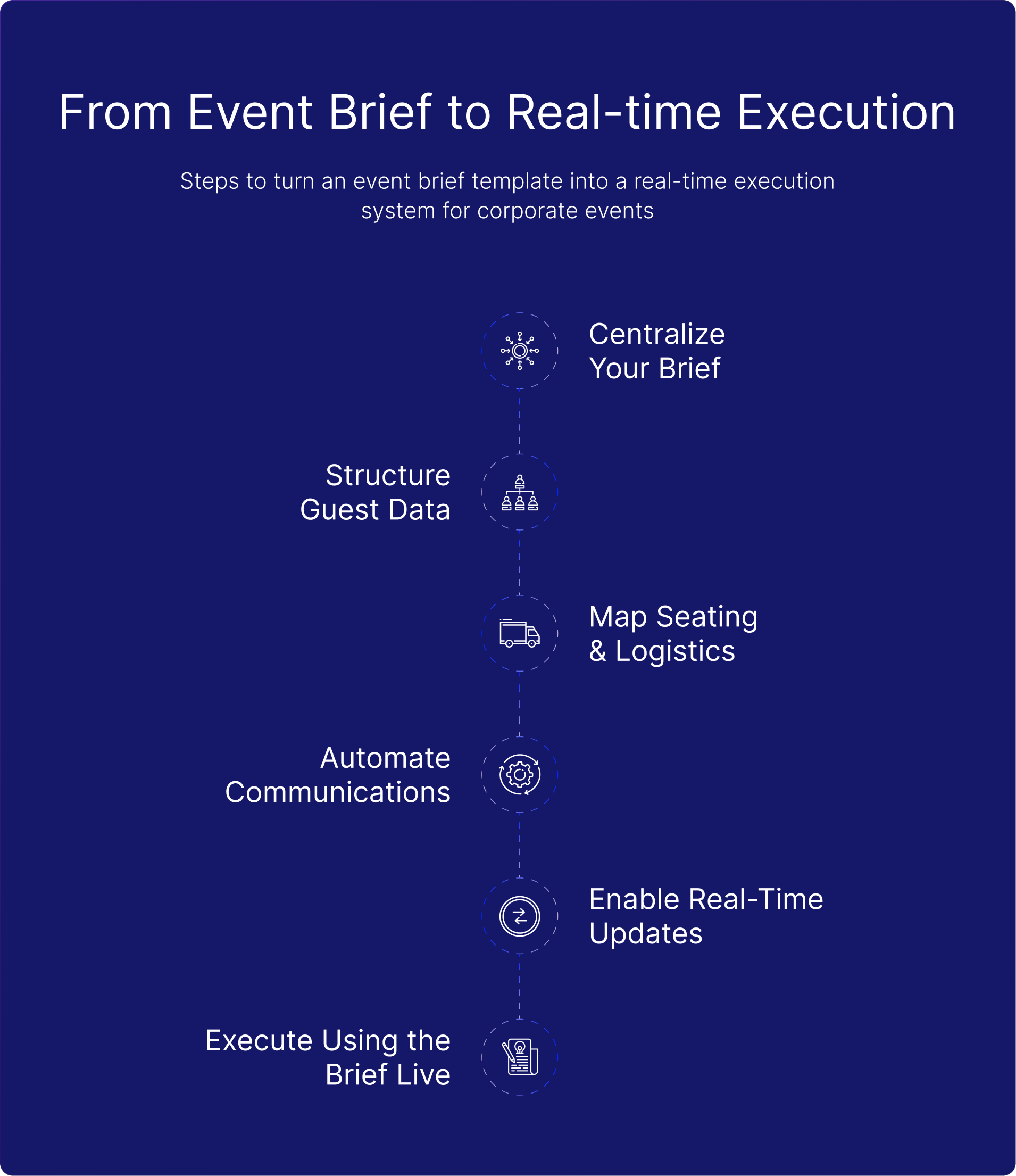
An event brief only works if it is actively used during execution. The shift from planning to execution happens when your brief becomes a live, working system, not a static document. Here are the steps for turning your event brief into action:
- Step 1: Centralize your brief in one system
Move your event brief into a single shared platform so everyone works from one source of truth. - Step 2: Upload and structure your guest data
Import and categorize your guest list, then connect it to your RSVP or registration system. - Step 3: Map seating and logistics to real assets
Convert your seating plan and run of show into tools your team will use on event day. - Step 4: Connect communications to guest actions
Automate messages based on real-time updates like RSVPs and schedule changes. - Step 5: Enable real-time updates across teams
Make all changes in one place so updates reflect instantly across teams and systems. - Step 6: Use the brief actively during the event
Use the brief live to guide decisions and keep execution aligned.
It should function as your operating dashboard, not just a reference file.
Streamline Your Corporate Events With VOW
A strong event brief template aligns your team. VOW actually turns it into execution through our integrated event management platform that combines all key functions like:
- Guest management
- Seating and logistics
- Communications (email, SMS, alerts)
- Check-in and real-time tracking
- AI-powered guest support
Our all in one software can be set up in minutes, onboards teams instantly, and executes without fragmentation.
Final Thoughts
A great event isn’t built in the moment, it’s built in the brief. The more structured your event brief template, the fewer decisions you’ll have to scramble through when it matters most. And when that brief connects to a live system like Vow, execution becomes effortless.
Try VOW now and run your next event with total clarity.
Frequently asked questions
- What is the difference between an event brief and an event plan?
An event brief defines the strategy, goals, and structure of the event while an event plan focuses on execution timelines, tasks, and logistics. The brief informs the plan.
- Who is responsible for the event questionnaire?
The event lead or project manager should own the event questionnaire, with input from all stakeholders. Their role is to collect, consolidate, and resolve conflicting inputs early.
- How far in advance should the pre-event strategy be finalized?
For corporate events, the pre-event strategy should be finalized 10-12 weeks in advance. Larger or more complex events may require up to 20 weeks.
- What should be included in an event brief template?
A complete event brief template should include pre-event strategy, stakeholder inputs, guest management, event logistics planning, communications, and an event plan checklist.